
What Do UK Renters Want in 2026? The Non-Negotiables Shaping the Rental Market
Renting has become a long-term reality for millions of people, but the gap between what renters need and what they can realistically find (and afford) often feels wider than ever.
To understand what do renters want right now, CIA Landlords commissioned OnePoll to survey 2,000 UK renters. The research explores the features renters prioritise, what they’ll sacrifice, what makes them feel secure, and which landlord behaviours are true deal-breakers.
Key findings at a glance
- Rent affordability dominates decision-making: 81% say it’s a top/high priority.
- Most renters expect things to get tougher: 47% expect renting to become less affordable in 2026.
- The “stay put” prize is real: 81% would stay 5+ years if a home met their top priorities.
- The biggest landlord deal-breaker is rent shocks: 55% cite unexpected/large rent increases.
- Homes affect heads: 87% say where they live matters for their mental wellbeing.
1) Affordability first: the foundation of “what do renters want”
When asked directly, renters were clear: affordability comes before everything else. In fact, 36% call rent affordability their top priority, and a further 45% say it’s a high priority (81% combined).
And for many renters, it’s not a small line item it’s the main event. Renters report spending an average of 34.85% of their take-home pay on rent.
With that baseline, it’s perhaps no surprise that nearly half (47%) expect renting to become less affordable in 2026.
What this means: if affordability is fragile, everything else becomes negotiable, from outdoor space and location to the condition of the property.
2) The rental “wish list”: the features renters value most
When renters rated individual features, several essentials stood out as “table stakes”:
- Storage space is important to 86% (53% very important).
- Fast, reliable broadband is important to 85% (51% very important).
- Good noise insulation / quiet location is important to 85% (43% very important).
- Modern kitchen and bathroom is important to 82%.
- Energy efficiency / EPC matters too: 79% say it’s important.
Outdoor space is also a major “quality of life” factor. 74% say a private garden or access to outdoor space is important (41% very important).
3) Gardens, outdoor space, and mental wellbeing
One of the strongest themes to emerge is how closely renters link their home environment to their mental health.
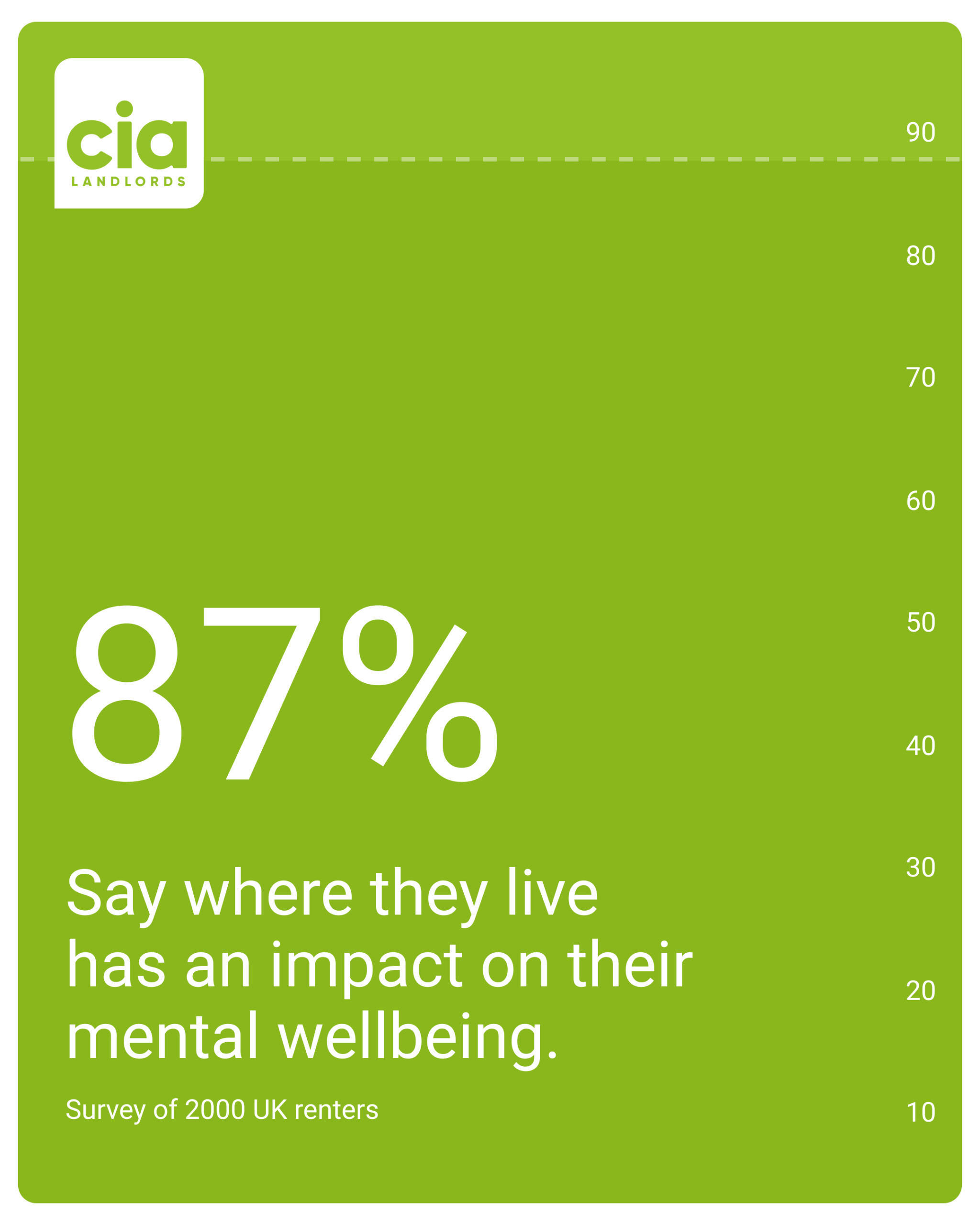
87% say where they live is important to their mental wellbeing (45% “very” important).
That context helps explain why outdoor space shows up repeatedly: it’s rated important by 74% of renters, and it ranks as the #1 top-three priority (32%).
For many households especially in more built-up areas, a garden, balcony, or even reliable access to outside space isn’t a “nice to have”. It’s part of feeling settled, calm, and able to switch off.
The top priorities renters choose (when forced to pick three)
When renters had to choose their top three priorities, the winners were:
- Private garden / outdoor space (32%)
- Being allowed pets (30%)
- Proximity to public transport (29%)
- Good noise insulation / quiet location (29%)
- Fast and reliable broadband (26%)
In short: renters want a home that’s liveable day-to-day not just somewhere they can technically sleep.
4) Security and stability: what makes renters feel safe
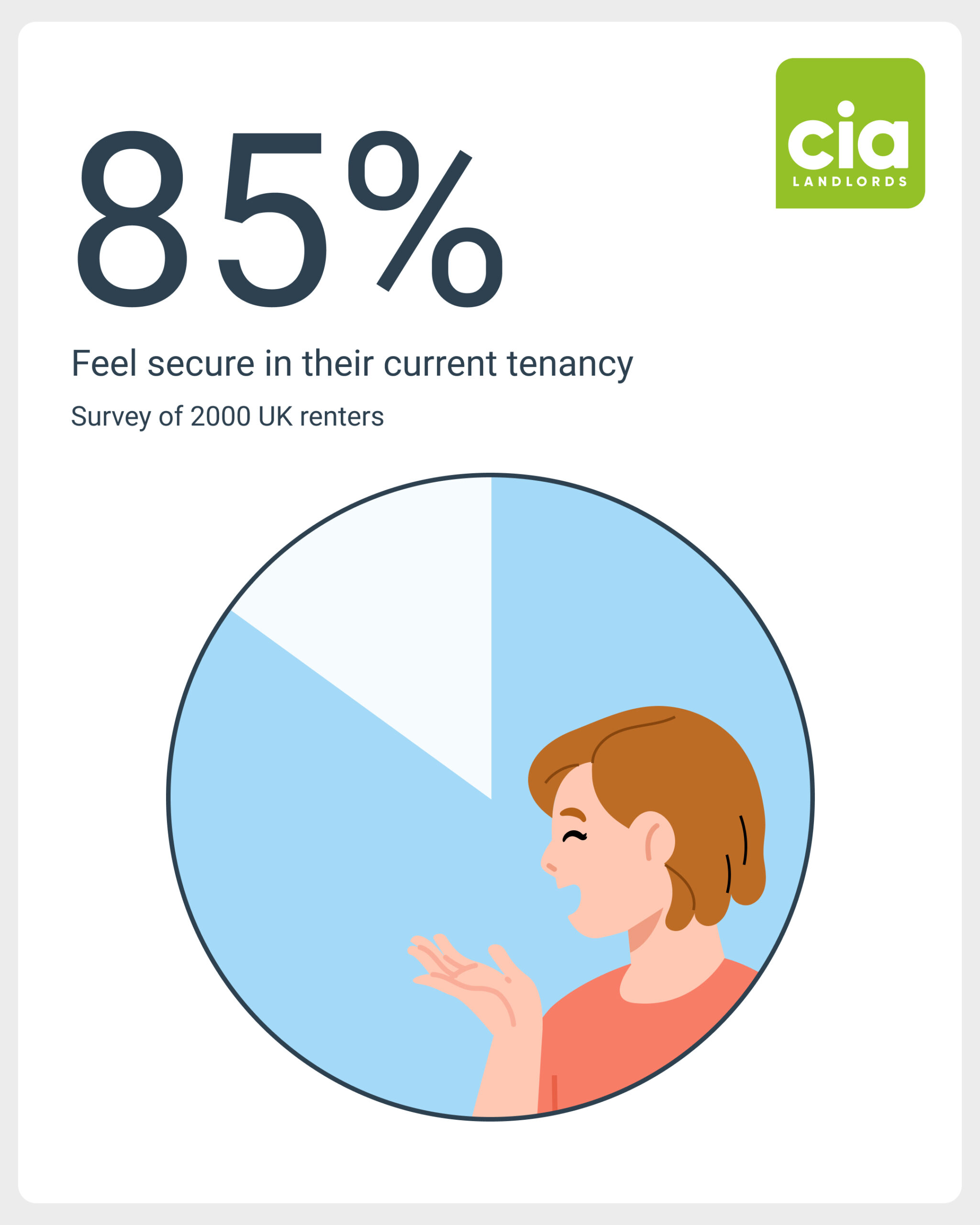
Security is a huge part of what renters want from a tenancy and many renters do feel secure day-to-day. 85% say they feel secure living in a rented home (32% “very” secure).
But when asked what would give them the greatest sense of security, renters focus on stability in costs and contracts:
- Limits on rent rises (28%)
- Longer fixed-term agreements (20%)
- Option to renew the tenancy (without hassle) (16%)
- Rolling contracts with strong notice periods (14%)
- Stronger legal rights around evictions (13%)
What contract lengths do renters prefer?
The most popular choice is a 12-month rolling contract (37%).
This points to a desire for a “middle ground”: renters want commitment and predictability without feeling trapped.
5) Deal-breakers: what actually pushes renters to leave
If you want to understand what do renters want, you also need to understand what they won’t tolerate.
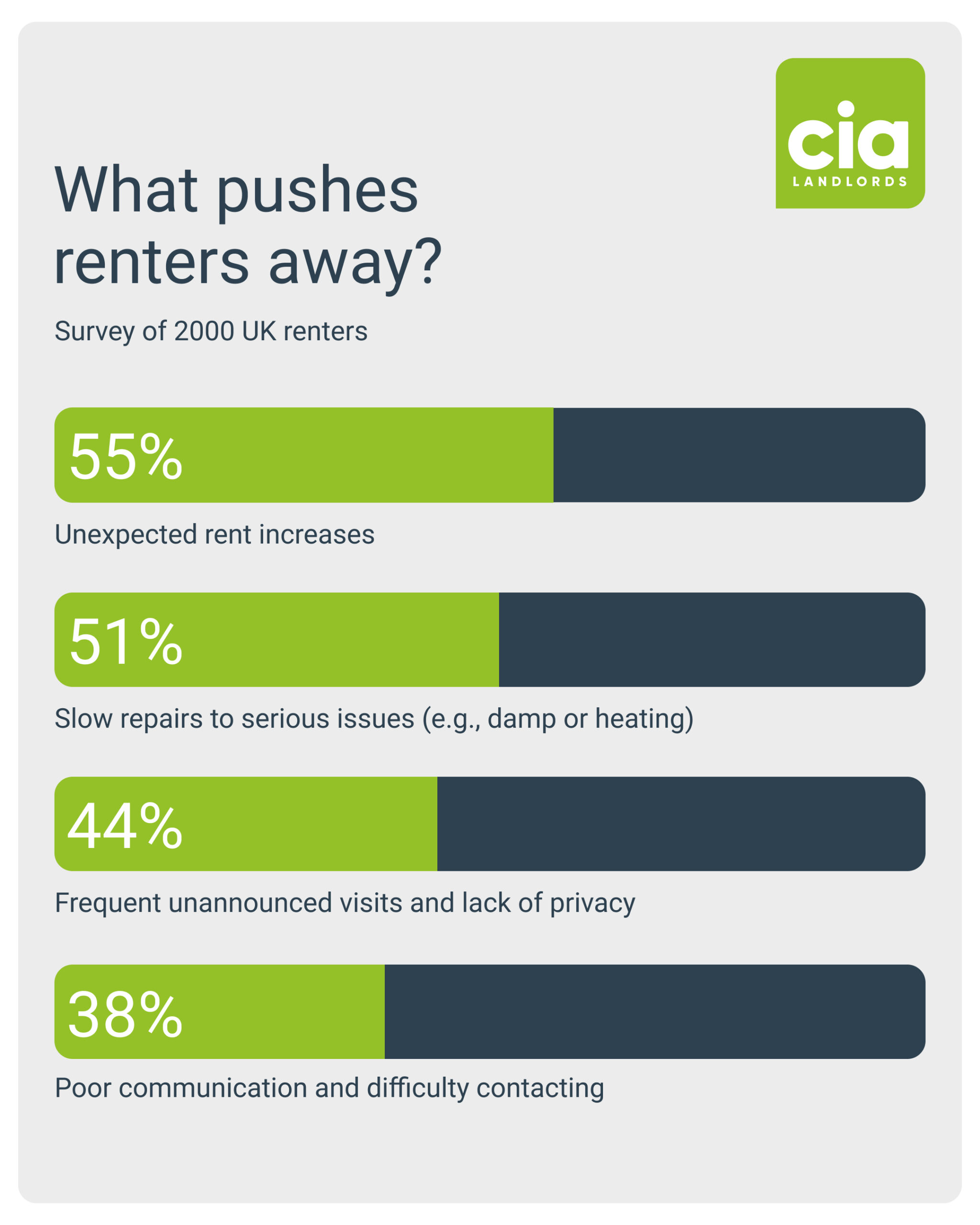
The biggest tenancy deal-breakers are landlord/agent behaviours that create stress, instability, or unsafe living conditions:
- Unexpected or large rent increases (55%)
- Being slow to fix issues (51%)
- Not dealing with damp and mould (34%)
- Very strict rules on decorating (28%)
- Not being allowed pets (28%)
There’s also a “non-negotiables” list when it comes to missing home features. We asked which missing features would be deal-breakers, renters most often chose:
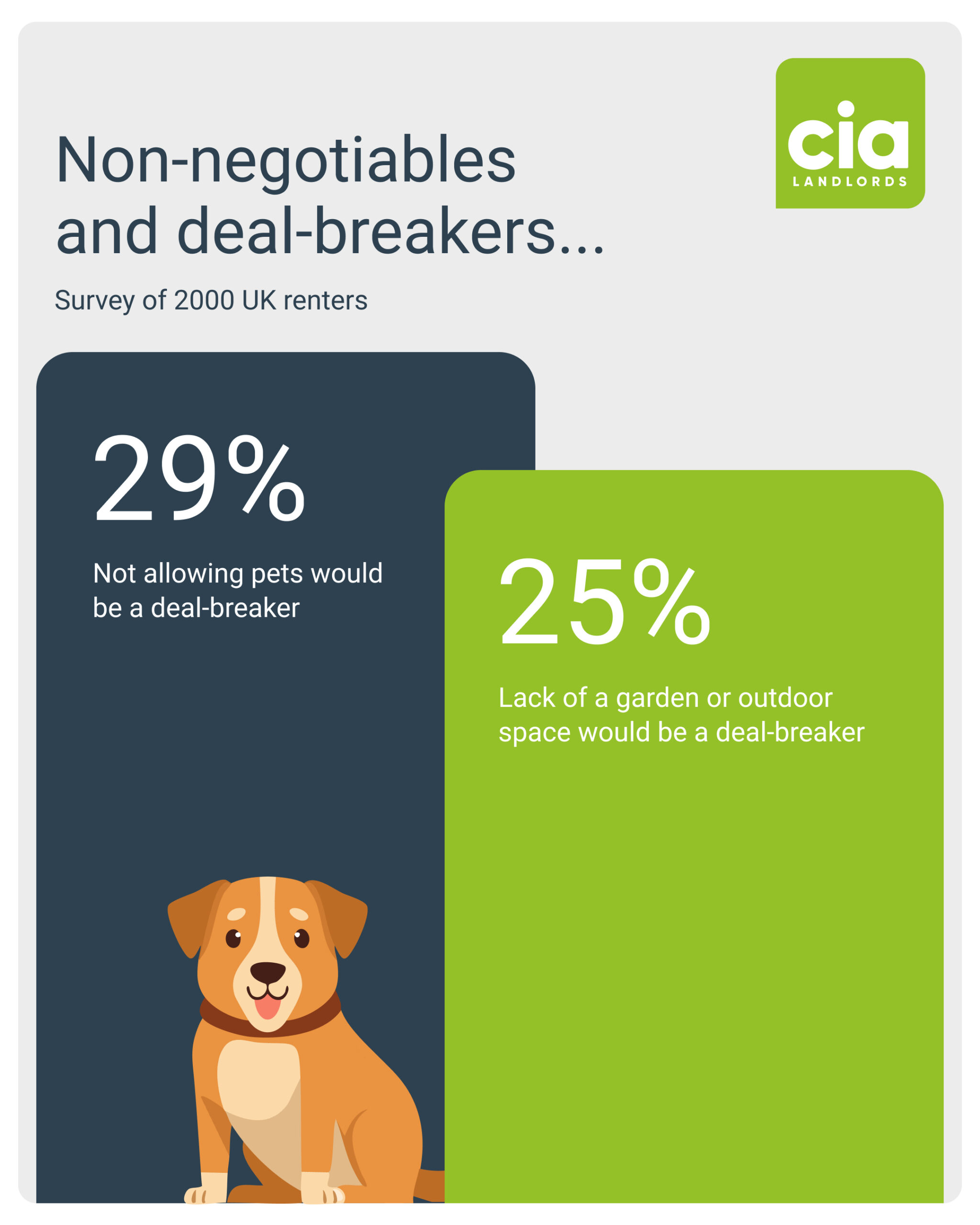
- Pets allowed (29%)
- Outdoor space (25%)
- Quiet / noise insulation (23%)
- Public transport links (22%)
- Broadband (21%)
6) The landlord–renter relationship: communication and expectations
Despite the headlines, renters’ overall view of landlords/agents isn’t universally negative. In this survey, 67% felt favourable overall (19% very favourable).
What renters want most from a landlord/agent
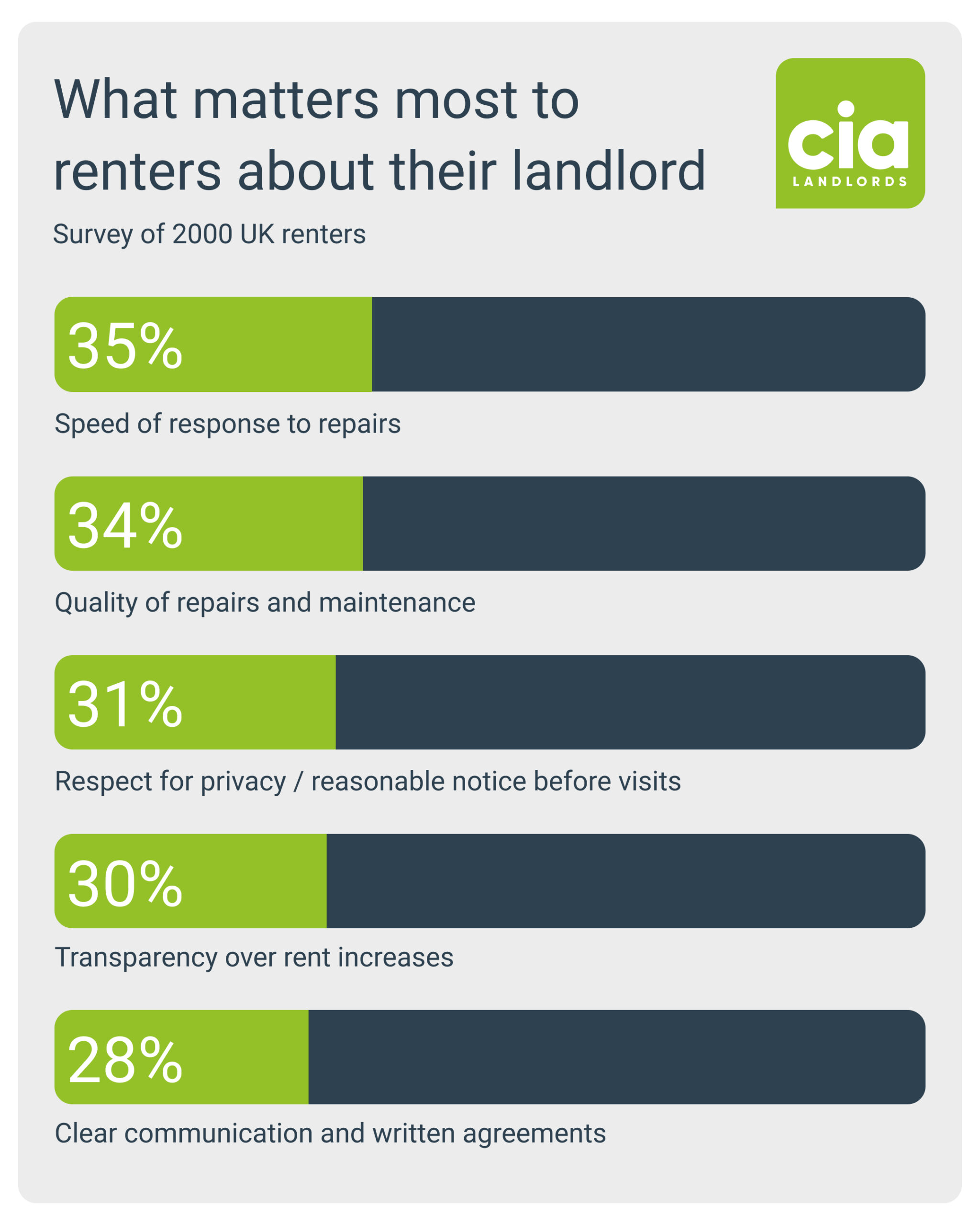
Top expectations include:
- Fast response to repairs/maintenance (46%)
- Clear communication (44%)
- Respect for privacy (41%)
- Fair rent pricing (40%)
How renters prefer to be contacted
- Email (59%)
- Instant messaging (38%)
- Phone call (26%)
- Text (22%)
- Tenant portal (20%)
And on how frequently renters like to be contacted, most generally preferred a light touch:
- Once per month (32%)
- Once per quarter (29%)
- Only when necessary (22%)
7) What renters will sacrifice (and what they won’t)
When budgets tighten, renters do make trade-offs, but the compromises aren’t evenly spread. The most common sacrifices renters would make to afford a home with their top priority features include:
- Size of the property (27%)
- On-street/driveway parking (26%)
- Modern fixtures/fittings (26%)
- Access to private outdoor space (25%)
- Location (25%)
- Condition of the property (21%)
However, 15% say they wouldn’t sacrifice any of these.
8) Will renters pay more for the right home?
The research suggests many renters will stretch if it genuinely improves stability and quality of life.
- 44% would consider paying a higher deposit for a property that meets all their top priorities.
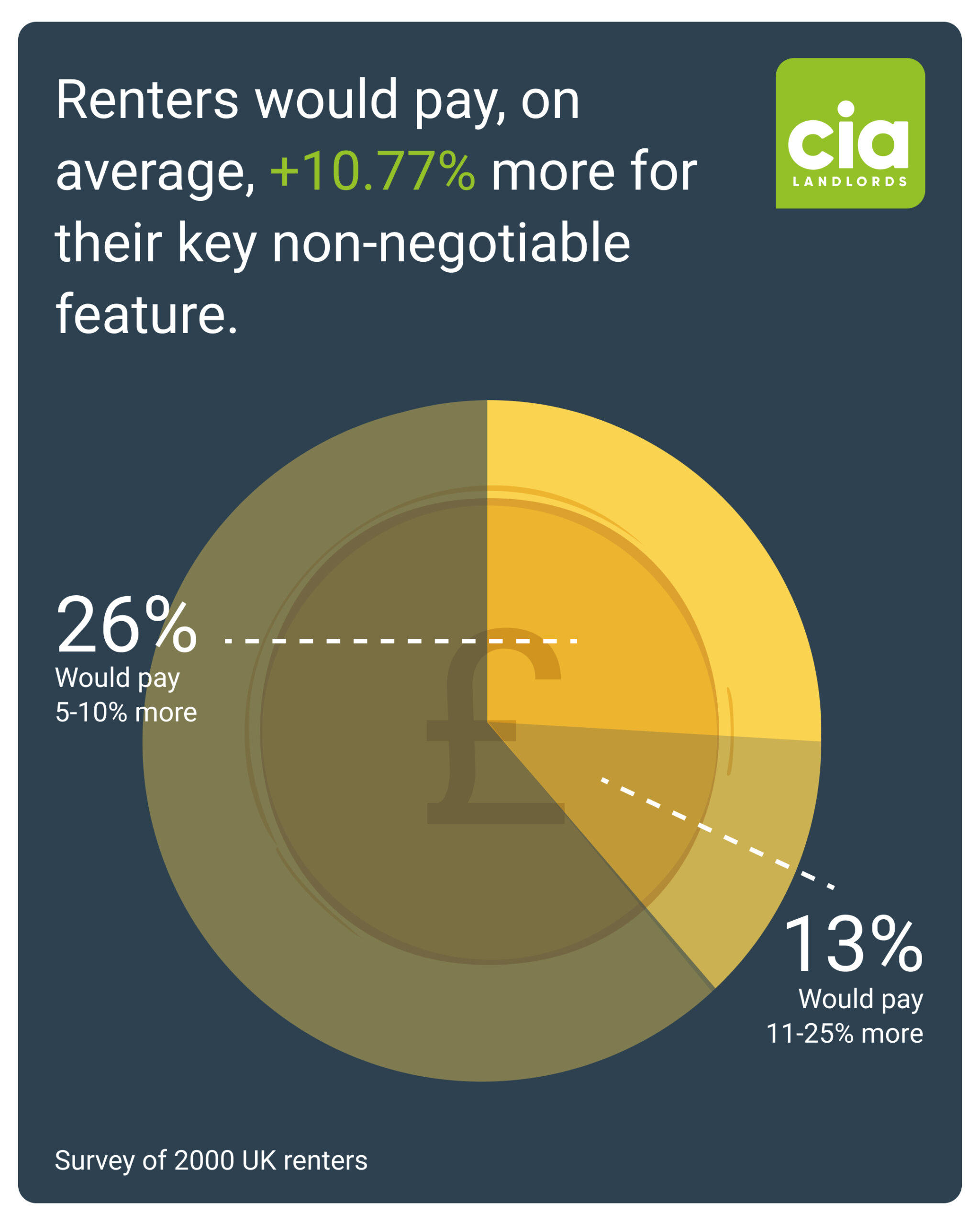
- When asked what extra rent they’d pay for their favoured “deal-breaker” feature, renters gave an average uplift of 10.77%.
This reinforces a crucial point: renters may accept higher costs, but they expect real value and fewer stressors in return.
What this means for landlords in 2026
For landlords, the data paints a practical roadmap:
- Protect trust around rent changes: rent shocks are the biggest deal-breaker.
- Get repairs right quickly: responsiveness is renters’ #1 relationship expectation.
- Prioritise liveability: storage, broadband, quiet, and modern kitchens aren’t “luxuries” to renters they’re fundamentals.
- Remember wellbeing: renters strongly connect home environment to mental health and gardens/outdoor space carry outsized value.
- Communicate how renters want: email-first, with a light-touch cadence unless something needs action.