
Legionella checks for landlords
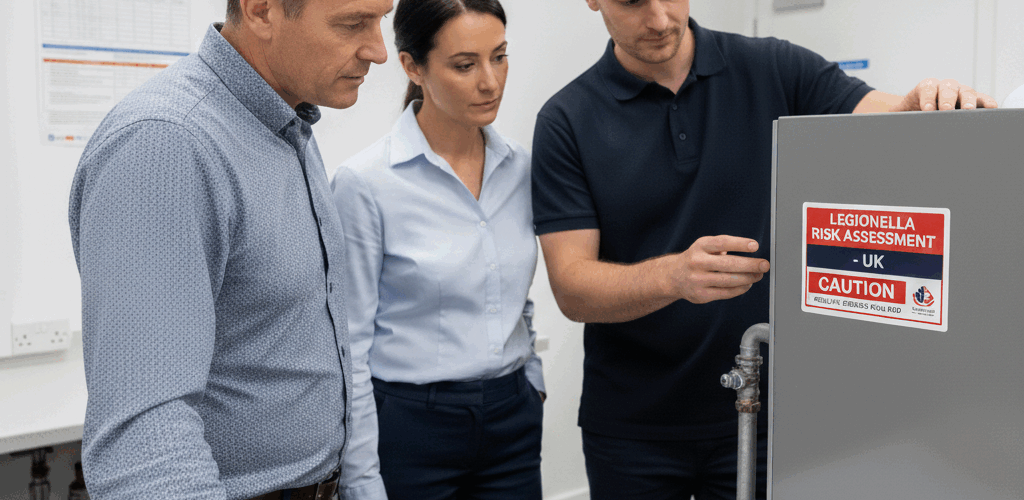
19-01-2026 | Legal Advice for LandlordsBeing a landlord in the UK means that you have a legal duty to assess and control the risk of your tenants being exposed to Legionella in your rental property. Unlike the Gas Safety Certificate, the requirement for Legionella checks can at times be misunderstood, which can cause landlords to panic or overspend on unnecessary tests.
Here, we’ll go through your responsibility as a landlord for Legionella checks and what this means legally.
Legionella checks for landlords
Your responsibility as a landlord for Legionella checks falls under the Health and Safety at Work etc. Act 1974, as well as the Control of Substances Hazardous to Health Regulations 2002 (COSHH). So, essentially, what this means is that if you are responsible for the premises, you are legally required to carry out a sufficient assessment in order to establish if there is a risk of Legionella bacteria exposure at the property.
Your main responsibility will be to assess the risk, not necessarily conduct an intricate water test – leave this to the professionals. You won’t need to attain a Legionella testing certificate by law, and the only thing that matters is that you document the risk assessment and the measures you’ve put in place to control the issue.
Understanding the risk in domestic properties
It’s important to note that Legionella thrives in warm, stagnant water, which then results in Legionnaires’ disease. This can be a potentially fatal form of pneumonia and transpires when contaminated water droplets are inhaled. Here are the risk factors that allow the Legionella bacteria to multiply:
- Temperature: water stored or circulated between 20-45 degrees Celsius.
- Stagnation: water that sits unused for a prolonged period of time
- Nutrients: if there is any rush, sludge, scale or sediment in the water system
- Aerosols: the creation of water spray (for example, from shower heads)
Most small, domestic properties that are fed directly from the mains and use a combi-boiler are at low risk. This is because water is heated quickly and is rarely stored.
Practical steps for your Legionella check
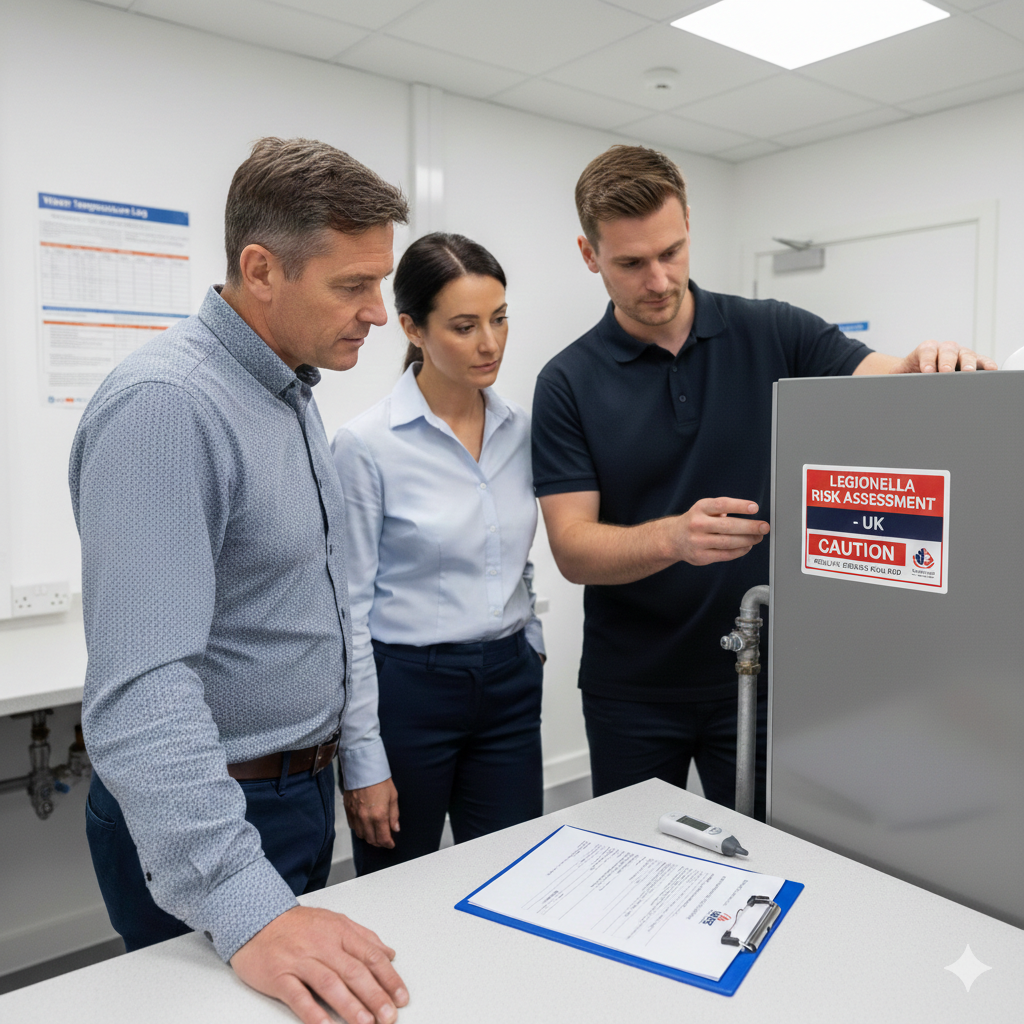
If you feel competent enough to, you can also conduct your own basic Legionella check. This will require you to have a good enough understanding of your property’s water system, however. You’ll need to hire a professional to conduct the Legionella check if your water system is more complex, for example, if your property uses cooling towers, large communal tanks, or swimming pools/spas.
In your written assessment, you should be sure to cover the following points:
A. System and inspection
- Water storage: Do you have a cold water storage tank (typically in the loft)? If so, check if it has a tight-fitting, secure lid to prevent contamination. Also, check if the tank is clean and free from debris and rust.
- Water system design: Are there any redundant pipes or unused outlets? Remember, stagnant water is a risk of Legionella.
- Outlets: Make sure that you inspect all showerheads, taps and pipework for any signs of scale, corrosion or slime. This creates an environment for the Legionella bacteria.
B. Temperature control
Use a reliable thermometer to check and record the following temperatures:
- Hot water storage (Cylinder/Calorifier): The water must be stored at at least 60 degrees Celsius to kill the bacteria.
- Hot water taps: The water should reach the nearest and furthest hot water taps at over 50 degrees Celsius within one minute of running.
- Cold water taps: The cold water from the tap should be below 20 degrees Celsius after two minutes of running.
If you find that your water falls between 20 and 45 degrees Celsius, you should be taking immediate action to adjust the thermostat or investigate why the insulation is poor.

What to do next
Next, you should be looking at implementing control measures so that you can manage the risk identified during your Legionella check.
- Stagnation: Flush the entire water system before a new tenant moves in. You should let the taps and showers run for more than 2 minutes.
- Outlets hardly used: Advise your tenants to flush outlets that are rarely used at least once per week.
- Showerheads: Advise your tenants to clean and descale showerheads on a regular basis to prevent nutrient build-up.
- Water tank storage: Make sure the lid to your water tank is secure and that the tank is cleaned.
- Redundant pipework: Remove any pipes where water has the potential to remain stagnant.
Documentation is key
As with anything in your property investment business, make sure that you keep detailed records and documentation of any work conducted on your property. If a tenant manages to contract Legionnaires’ disease, you’ll need to be able to prove what steps were taken to prevent this from happening.
Here’s what you should include in your documentation:
- The date the Legionella check was carried out.
- The name of the person who conducted the Legionella check (you or a professional).
- Describe your water system in detail.
- The temperatures recorded at key points.
- A list of any identified risks and the steps taken by you to prevent them.
- A copy of the advice given to the tenant (make sure this is done in writing).
Make sure that you review your Legionella risk assessment periodically, for example, when there are any significant changes to the water system, or at the start of a new tenancy. A review every two years is advised.
By implementing these steps, you’ll ensure that your property is protected from Legionella, offering your tenants a safe and habitable environment. Legionella checks for landlords don’t have to be a stressful process to implement.
As a landlord, you may also be looking for landlord insurance to help protect your investment. CIA Landlords has the knowledge and expertise needed to find a quote best suited to your needs. For more information on landlord insurance and managing your rental property efficiently, feel free to visit our advice centre. Otherwise, make sure to get in touch with our friendly team of specialists at CIA Landlord Insurance on 01788 818 670.
We won't be beaten on any like for like landlord insurance quote.
Get a quote